Custody navigator Chelsea Rutherfood looking through the hatch on a cell door
“I’m going to be your biggest cheerleader now, and I’m not going to stop until you tell me you’re ready to go.”
Being there when it matters most
Every year, thousands of people pass through Merseyside’s custody suites. Among them are some of the region’s most vulnerable children and young people, many facing challenges that stretch far beyond the circumstances that led to their arrest.
Recognising that youth offending is often linked to trauma, exploitation, poor mental health, adverse childhood experiences and unmet need, partners across Merseyside came together in March 2025 to pilot a different approach. The Custody Navigator programme, based at Copy Lane Custody Suite in Sefton, introduced trauma-informed youth workers into custody to engage children aged 10 to 17 at a critical moment and connect them with support that could help change the course of their lives.
Funded by the Merseyside Violence Reduction Partnership and delivered by Sefton Council, the pilot was built around a simple idea: use the time a young person spends in custody as an opportunity for positive intervention rather than simply processing an offence.
At the heart of the programme is a dedicated team. Chelsea Rutherford has been involved since the scheme launched, helping establish the role within custody and build trusted relationships with officers, partner agencies and families. Beth Chai-Thompson joined in summer 2025 as the programme grew, while Sam Taylor recently joined the Sefton team from Mersey Care’s Liaison and Diversion Service, bringing valuable experience of supporting vulnerable people within the justice system.
What began as a small pilot has since developed into one of the most innovative youth justice interventions in Merseyside.
A pilot making a difference
The Custody Navigator model focuses on early intervention. Navigators meet young people while they are in custody, offering emotional support, guidance and practical help. More importantly, their involvement does not stop when a child leaves the suite.
If the young person consents then they will receive follow-up contact within the following week, home visits and continued support to help them engage with education, health, social care and community services. Working alongside Youth Justice Services, NHS Liaison and Diversion teams and safeguarding partners, Navigators help create a network of support around each child.
The programme has also helped strengthen relationships with families, many of whom may have become disengaged from services. By taking time to listen and understand individual circumstances, Navigators help parents and carers access support while encouraging positive engagement with agencies that can make a lasting difference.
Alongside the Navigator role, four dedicated trauma-informed custody cells and a break-out room were introduced at Copy Lane, creating a calmer environment designed to reduce anxiety and help children regulate their emotions during what can be a stressful experience.
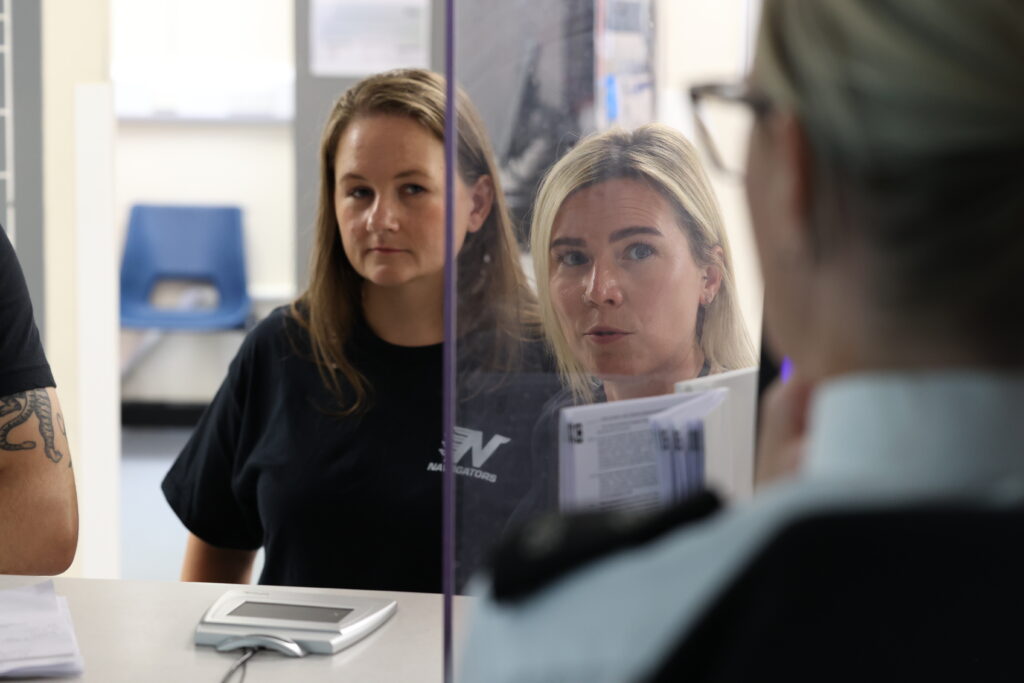
The impact so far
The impact so far
The pilot’s results have been impressive.
An independent evaluation by Liverpool John Moores University found that:
- 84% of children accepted support from a Navigator while in custody.
- 65% continued engaging with community-based services after release.
- Around 150 young people were supported during the programme’s first year.
- 25% of children supported were looked-after children.
- 52% had social care involvement.
- 63% had an identified disability or health need, with ADHD the most common.
The findings reinforce what custody staff already know: many young people entering custody are dealing with significant vulnerabilities. They also highlight the importance of early support delivered at the right time.
Feedback from young people, families and partner agencies has been overwhelmingly positive, particularly around trust, reassurance and engagement with services. Just as importantly, many of the young people supported through the programme have not returned to custody, demonstrating the value of providing support at a critical point in their lives.
Expanding across Merseyside
Following the success of the pilot, the programme is now entering its next phase.
The Custody Navigator scheme is expanding across Sefton and launched at Wirral Custody Suite in August 2026, giving more vulnerable children access to support at a crucial point in their journey.
The expansion reflects growing confidence in a model that combines trauma-informed practice, partnership working and early intervention. What started at Copy Lane is now becoming an increasingly important part of Merseyside’s approach to supporting children within the justice system.
Taking the next step: into the Youth Courts
The success of Custody Navigators has already inspired the programme’s next evolution.
Liverpool Combined Youth Court recently became home to the pioneering Merseyside Youth Court Solutions programme, introducing dedicated Court Navigators to support young people and families throughout the court process. Believed to be the first service of its kind on mainland Britain, the initiative builds on the principles that have already proven successful within custody.
The service provides support not only for children attending court, but also for parents, carers, victims, witnesses and wider family members. Court Navigators offer guidance, emotional support and help people understand what can often be an intimidating process.
The court environment has also been redesigned with young people in mind, including improved welfare spaces, a dedicated briefing area and an interactive LEGO courtroom model that helps children understand what to expect before proceedings begin.
Demand for the service was immediate. On the very first day of operation, Navigators engaged with 10 young people and their families, and 37 young people across the first three days operating at court, demonstrating the clear need for additional support within the court setting. Together, the Custody and Court Navigator programmes now provide a more joined-up pathway of support from first contact with the justice system through to court and beyond.
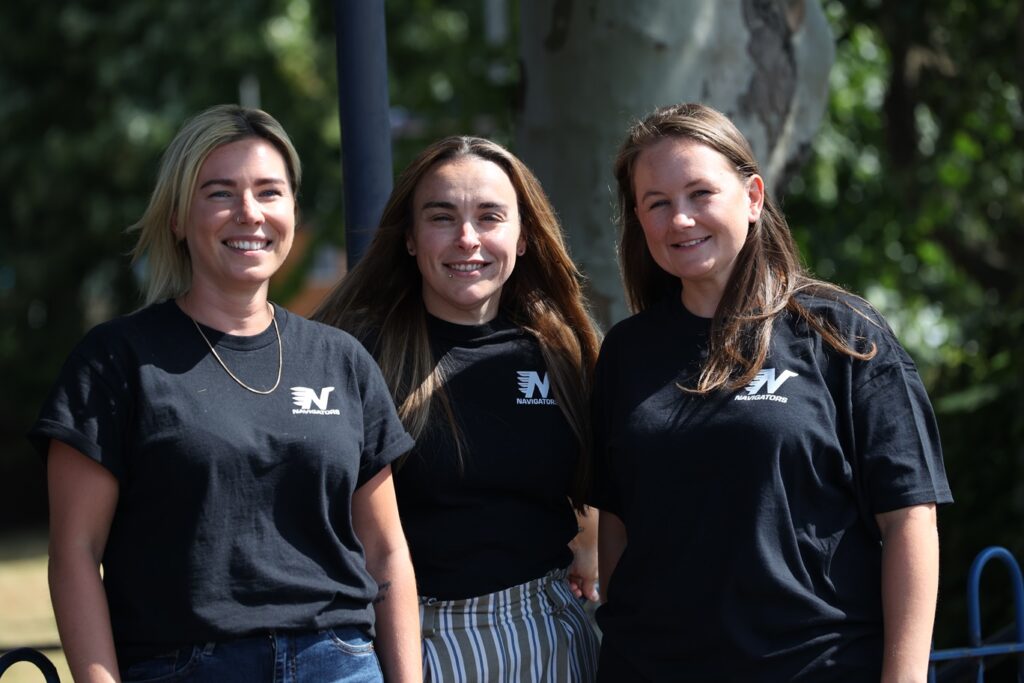
Get to know the Navigators
Chelsea: “I see us as almost welders. Families are being held down, and there’s a chain and those links get fractured over time when different services become involved. We’re constantly welding those pieces together or even replacing links with new services and bringing them in so that we create a stronger bond. We go into that family space, and we say, ‘Listen, we haven’t got an agenda. We’re not going to assess you. We’re not going to do this or that. We’re here for you. Tell us what you need and tell us what this child needs, and we’ll fight for them. I always say to every child I’ve met: ‘I’m going to be your biggest cheerleader now, and I’m not going to stop until you tell me you’re ready to go.’ This only works because we are not connected to any one service – we are independent.”
Chelsea: “Our custody cells are more trauma informed. For example, cell D1, the ceiling is space themed. We utilise it as a game as well, to support regulation. If children are in custody for a period, they get given distraction toys which they can also take home. We also have a digital clock as that is one question the staff get asked a lot. We have installed a chalkboard too which a young person is able to draw or write on. This is a great way to start conversations between them and us.
Chelsea: “We’ve successfully supported children to regulate their emotions, become more aware of positive relationships and understand what healthy relationships look like. We’ve engaged children in new activities they’ve never been involved in before.
Beth: “It’s helped us to work closer with families and help them with Early Help or Social Care Support. You know that not only have you worked with that child and you’re seeing the benefits to that child but you’re also seeing the benefit to the whole family as well.”
Chelsea: “We’ve started a bike project. Our children will gain five certificates in bike maintenance and health and safety. Some of our kids don’t have any certificates at all so it’s a benefit to them as they’ve got qualifications, but, also, they’re giving back; the first bike they do is donated to the community. E Bikes are massive now, and conversion packs, so while we are doing the bike project, we are talking to them about the impact on the brake systems, if you’re converting a bike then those brakes aren’t made for them.
Beth: “I’ve got one young person I’ve been working with for a few months. Every time she gets in the car, she talks non-stop until I drop her off. At the end she always gives me a big hug, says thank you, and off she goes. She’s made so much progress and put in so much effort herself. It’s an absolute privilege to be part of that journey, and I’m seeing her grow and develop and take accountability. They are the bits you don’t get anywhere else.”
Beth: “Being trusted with a child’s insecurities and vulnerabilities should always be treated as a privilege. For a child to say, ‘This is me, and I’d love you to try and help me if you can,’ and to be able to do that every day – we’re genuinely very lucky. I absolutely love it.”
A brighter future
Just over a year since its launch, the Custody Navigator programme has demonstrated the power of meeting young people at a pivotal moment in their lives. With strong engagement rates, support from frontline staff, expansion into new custody suites and the creation of a pioneering Court Navigator service, the programme is continuing to grow.
From a single pilot at Copy Lane to emerging services across custody suites and court settings, Navigators are helping to reshape how young people experience the justice system.
Most importantly, they are showing that behind every statistic is a young person with potential and that the right support, offered at the right time, can help change the course of a life.